
 Krist S
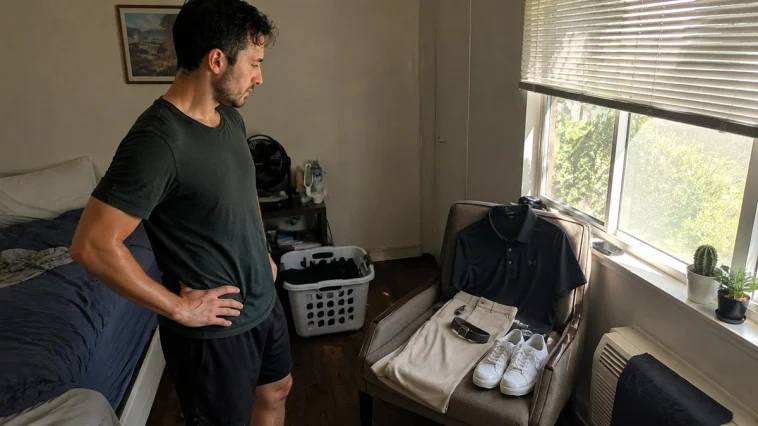
Men don’t really change summer outfits because of “fashion trends.” They change because the old options stop working in real life.
It gets too hot for layered outfits. Too many places in one day to keep switching looks. Too little patience for anything that needs styling decisions every morning.
Golf outfits didn’t rise because golf got popular. They became the default because they quietly solve a modern problem: how to look consistently acceptable across different environments with zero friction.
This is the part most articles miss. It’s not style evolution. It’s behavioral optimization.
Why are golf outfits suddenly everywhere in summer?
Golf outfits are everywhere because they remove “interpretation risk.”
In simple terms: nobody misreads them.
A polo shirt, structured shorts, and clean sneakers sit in a visual middle zone:
- not gym-only casual
- not office formal
- not fashion-forward
- not sloppy
They avoid extremes entirely.
That’s the real reason they scale in summer wardrobes. Not aesthetics. Not hype. Social safety.

What exactly counts as a golf outfit in real life?
Not everything labeled “golf wear” works in everyday styling. The outfits that actually function outside the course follow a repeatable system.
Think in three working archetypes, not fashion categories.
1. Default everyday summer uniform (safe baseline)
This is the most reliable version.
- Polo: plain white, navy, or grey (Nike Golf, Uniqlo AIRism, Lacoste classic fit)
- Pants: beige or navy chinos (slim-straight, no heavy taper exaggeration)
- Shoes: white minimalist sneakers (Stan Smith, Common Projects style, similar clean leather sneakers)
- Watch: simple metal or leather strap (understated size)
Why it works:
Everything stays in the same visual weight class. Nothing competes for attention.
2. Smart casual hybrid (office + café + meetings)
This is where golf outfits outperform regular menswear.
- Polo: dark solid performance polo (Nike Golf, Ralph Lauren Golf line, Adidas Golf)
- Pants: grey tailored trousers or stretch chinos
- Shoes: minimalist leather sneakers or clean loafers
- Watch: metal bracelet watch (simple dial, no oversized face)
Why it works:
It reads structured without shifting into formal territory. Perfect for hybrid workdays.
3. Heat-first weekend/travel outfit
This is where most men default without realizing it.
- Polo: light-colored breathable polo (pastel, white, soft blue)
- Shorts: structured chino shorts (above-knee, no cargo pockets)
- Shoes: clean sneakers or slip-ons
- Accessories: optional sunglasses only
Why it works:
It prioritizes airflow but keeps silhouette control, avoiding “gym shorts” appearance.
What ruins a golf outfit immediately? (Do / Don’t clarity)

Most outfit failures happen from mixing style systems, not bad clothing choices.
DO:
- keep colors muted or coordinated (max 2–3 tones)
- use structured fabrics (chinos, not loose jersey shorts)
- choose minimal footwear silhouettes
- keep logos small or absent
DON’T:
- pair polos with bulky running or basketball shoes
- wear oversized gym shorts with structured tops
- mix hiking or technical outdoor shoes with smart chinos
- combine loud graphic polos with patterned bottoms
Simple rule:
If one item looks like gym gear and another looks like office wear, the outfit breaks instantly.
Why do men actually wear golf outfits in real situations?
This isn’t theoretical. It shows up in predictable behavior patterns.
Airports
Men default to polos + chinos because:
- less wrinkle risk than shirts
- easier movement through security
- no overdressed travel signal
Result: airport dressing becomes “mobility uniforming,” not styling
Hybrid workplaces
In flexible dress code environments:
- formal wear feels unnecessary
- casual wear feels too relaxed
Golf outfits sit in the middle without social friction.
Cafés, malls, weekend social settings
Here the goal isn’t to stand out.
Golf outfits work because they:
- don’t look like effort
- don’t look careless
- don’t require explanation
That balance is why they repeat.


The assumption that makes people get this wrong
Most people think:
“Simple outfits are boring.”
That’s incorrect.
In summer menswear, simplicity only fails when structure is missing.
Golf outfits succeed because:
- simplicity + structure = clarity
- simplicity without structure = laziness
That difference is everything.
Why golf outfits became a permanent summer default (not a trend)
Trends usually rise because they introduce something new.
Golf outfits spread because they remove something:
- decision fatigue
- social misreading
- outfit incompatibility across settings
Modern daily life increases context switching:
- home → office → café → travel → social events
Golf outfits reduce the number of outfit changes needed across those transitions.
That’s why they don’t fade seasonally. They solve a repeating constraint.
The real contradiction behind golf outfits
People assume golf outfits are about looking relaxed.
That’s not accurate.
They are about controlled appearance stability.
Not relaxed. Not formal. Not expressive.
Stable.
That’s why they feel “safe” in almost any environment.
Why golf outfits look expensive (even when they aren’t)
It’s not brand-driven. It’s structure-driven.
Looks premium when:
- fabrics hold shape in heat (not limp cotton)
- colors are muted or balanced
- shoes are minimal and clean
- fit is tailored, not tight or oversized
Looks cheap when:
- logos dominate visual space
- shoes are bulky or overly technical
- shorts are too long or too loose
- fabric collapses or wrinkles heavily
It’s visual coherence, not price.
Conclusion
Golf outfits didn’t become a summer staple because they are fashionable. They became a default because they reduce friction in everyday dressing across multiple environments.
They work because they solve a very specific modern problem: maintaining a consistent appearance when your day keeps changing contexts.
That’s why they keep showing up everywhere in summer. Not as a style choice, but as a practical system.
And once that system clicks, it stops feeling like “wearing golf outfits” and starts feeling like just getting dressed without thinking too much about it.
Golf outfits work best in summer when you need one outfit to function across multiple settings without looking overdressed or underdressed. They are not about fashion expression, but about maintaining a consistent, low-friction appearance throughout the day.
If your day involves moving between casual, semi-formal, and travel environments, they act as a stable default system rather than a styled outfit choice.
Sources
https://www.gq.com/style
https://www.businessoffashion.com
https://www.voguebusiness.com
https://www.nytimes.com/wirecutter
MileseeY Golf Rangefinders | See Beyond Limits
Golf isn’t about guessing under pressure. It’s about seeing the number and trusting the shot that follows. MileseeY Golf brings next-gen accuracy to the course, engineered to elevate how you read every distance. See beyond limits at mileseeygolf.com and play with clarity, not uncertainty.